
Hair Restoration for Trichotillomania
Trichotillomania is a body-focused repetitive behavior, and the hair loss it causes is something we work with regularly. We build systems that restore coverage, look completely natural, and are designed with your specific situation in mind.
Understanding Trichotillomania
Trichotillomania is a body-focused repetitive behavior (BFRB) where someone pulls their hair out, usually in response to stress, anxiety, boredom, or as an automatic, unconscious habit. It's not a desire to be bald. It's a coping mechanism or compulsive behavior.
The condition typically begins in early adolescence or young adulthood, though it can start at any age. It often intensifies during stressful periods. Some people pull consciously in response to anxiety. Others pull unconsciously while concentrating or relaxing.
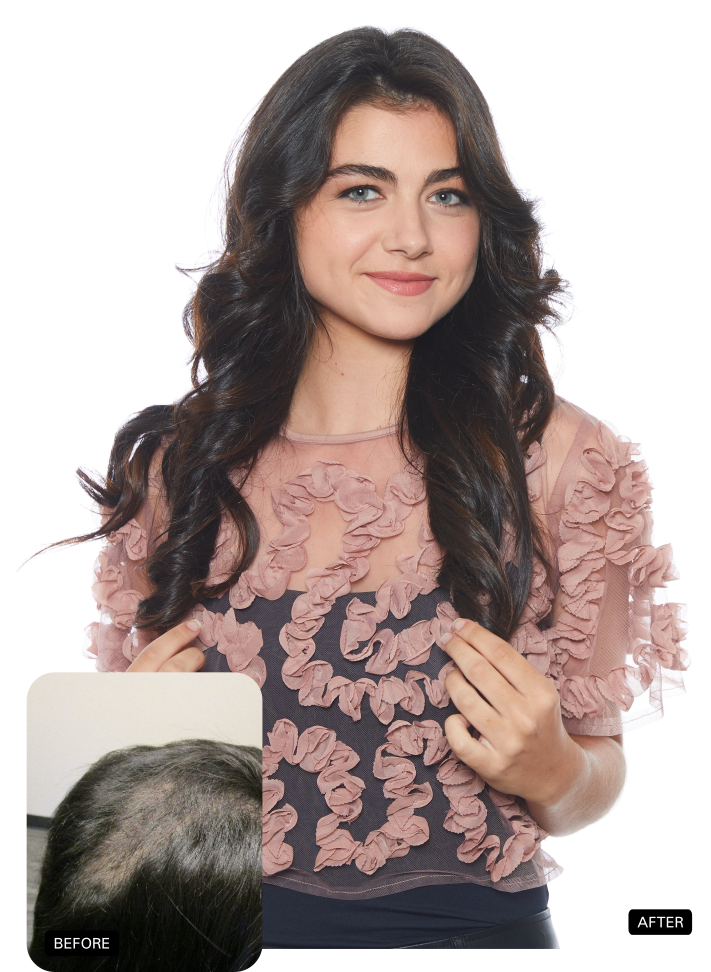
The consequences are visible: patchy hair loss, noticeable bald spots, asymmetrical thinning, broken hair of different lengths, or sometimes complete baldness. Many people also experience scalp damage, follicle damage, and skin picking (excoriation disorder), which often coexists.
Common Causes
Automatic Habit
Unconscious pulling during concentration, relaxation, or boredom.
Sensory Gratification
The physical sensation of pulling and the relief afterward.
Coexisting Conditions
Often related to OCD, anxiety, depression, or other mental health conditions.
Your Options at UHC
Hair Toppers
Partial coverage for localized pulling. Restore density in specific areas without full coverage.
What to Expect
Your first visit is a private, no-pressure consultation. We're familiar with trichotillomania and its trigger patterns, and we'll discuss how hair restoration might interact with those triggers.
Hair restoration isn't a substitute for behavioral work, but it can run alongside it. We build systems that restore coverage while you address the underlying condition, and we adjust as your situation changes.
Have Questions?
We Have Answers.
Will a hair system affect the pulling behavior?
It varies. Some people find that having restored coverage reduces the anxiety that triggers pulling. Others need behavioral work first. We discuss your specific situation and what makes sense as a starting point.
What if I pull at the system or remaining hair?
We design systems with secure application that makes pulling less accessible. We monitor your scalp and underlying hair, and adjust if the system is being affected.
How long do I need to wear a system?
As long as it's useful. Some people wear systems while working on behavior change and transition off as pulling decreases. Others use them long-term. There's no required timeline.
Do you coordinate with therapists?
If needed. Hair restoration and behavioral therapy work in parallel. We're happy to align with your therapist on timing and approach.
How much does a system cost?
Cost varies based on system size and customization. We discuss budget upfront and work within your financial reality.
Will my hair grow back if I stop pulling?
Usually, if follicles are still healthy. Long-term pulling can cause permanent follicle damage in some areas. A trichological assessment shows what's recoverable.
Request a Callback
We'd love to chat and answer your questions. Leave us your details below and let one of our specialists get back to you.
Callback Form
Book a
Consultation
Consultations are complimentary and confidential. They include a microscopic scalp analysis at no cost to you.