
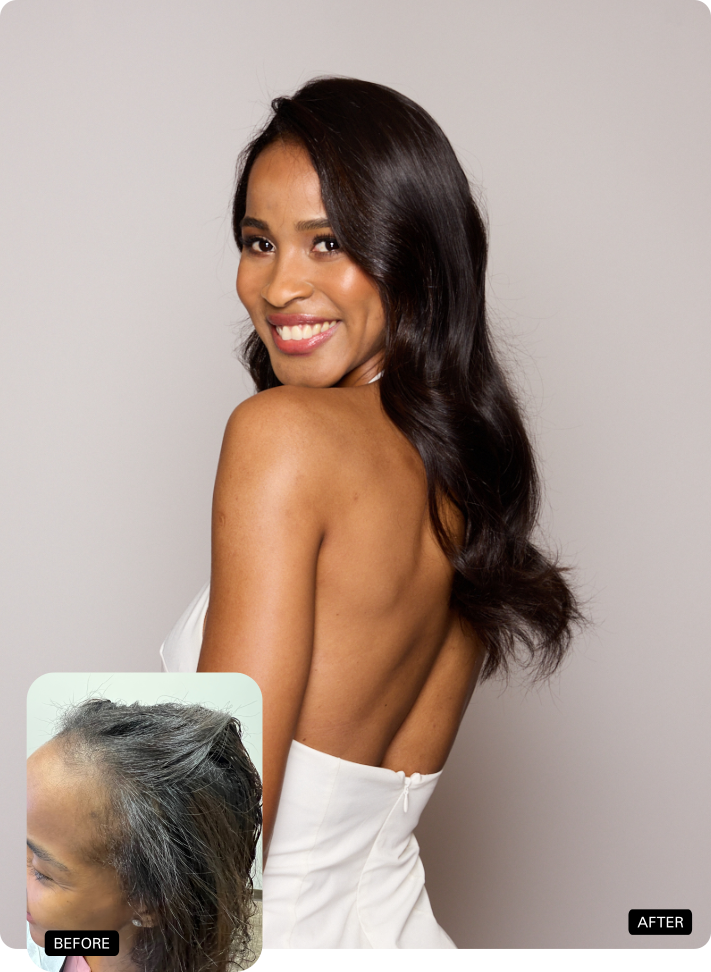
Traction Alopecia Restoration
Tight braids, heavy extensions, and prolonged weaves cause real follicle damage, especially along the hairline and temples. Early-stage traction alopecia can recover if you stop the tension. Advanced cases are permanent. We restore what's been lost, help you protect what remains, and work with you on sustainable styling practices that don't cause more damage.
Understanding Traction Alopecia
Traction alopecia is hair loss caused by chronic tension or pulling. Common causes are tight braids, weaves left in too long, extensions that are too heavy, and high-tension hairstyles worn repeatedly. The tension stresses the hair follicle, causing inflammation and eventually permanent damage.
The damage follows a pattern: hairline recedes, temples thin, edges are most affected. Early-stage traction alopecia can sometimes recover if you stop the tension immediately and allow follicles to rest. Advanced traction alopecia causes permanent follicle death. Hair won't regrow, regardless of what you do.
Timeline matters. Follicle damage accumulates gradually over months or years. Many people don't notice until significant loss has occurred. That's why traction alopecia is often underdiagnosed: it sneaks up, and by the time you realize what's happening, reversal may not be possible.
Common Causes
Tight Braids
Weaves Left Too Long
Weaves worn for months without breaks stress follicles and can cause permanent damage.
Heavy Extensions
Extension weight pulls on existing hair, stressing follicles and causing traction damage.
High-Tension Hairstyles
Poor Installation
Incorrect application or excessive weight causes accelerated damage.
Your Options at UHC
Custom Wigs
Full or partial coverage for more extensive loss. Custom-matched to your hair color and texture.
Hair Toppers
Partial coverage for hairline and temple areas. Easy to apply and remove. Allows scalp recovery between wears.
What to Expect
Your first visit is a private, no-pressure consultation. We assess the extent of damage, discuss what's reversible versus permanent, and explain what's possible.
If your traction alopecia is early-stage, the first step is stopping the tension and exploring protective style alternatives that don't damage hair. Your dermatologist may also recommend treatments to reduce inflammation and encourage follicle recovery.
Have Questions?
We Have Answers.
Is traction alopecia permanent?
Depends on the stage. Early-stage can recover if tension stops immediately. Advanced traction alopecia causes permanent follicle damage. A trichological assessment clarifies where you stand.
Can I still wear braids or protective styles?
Yes, with adjustments. Looser tension, shorter wear duration, and regular breaks are key. We help you find sustainable styling practices that protect your hair going forward.
Will the restoration match my natural texture?
Yes. We match your hair color, texture, curl pattern, and density so it blends seamlessly. Precision matching is what makes it undetectable.
How long does restoration take?
Results are visible immediately. Non-surgical hair restoration systems and toppers continue to integrate over 4–8 weeks, looking increasingly natural as they settle.
Can I combine restoration with medical treatment?
Yes. Some dermatologists recommend topical treatments or other interventions for early-stage traction alopecia. We work alongside that while restoring what's already been lost.
Request a Callback
We'd love to chat and answer your questions. Leave us your details below and let one of our specialists get back to you.
Callback Form
Book a
Consultation
Consultations are complimentary and confidential. They include a microscopic scalp analysis at no cost to you.