
Postpartum Hair Loss
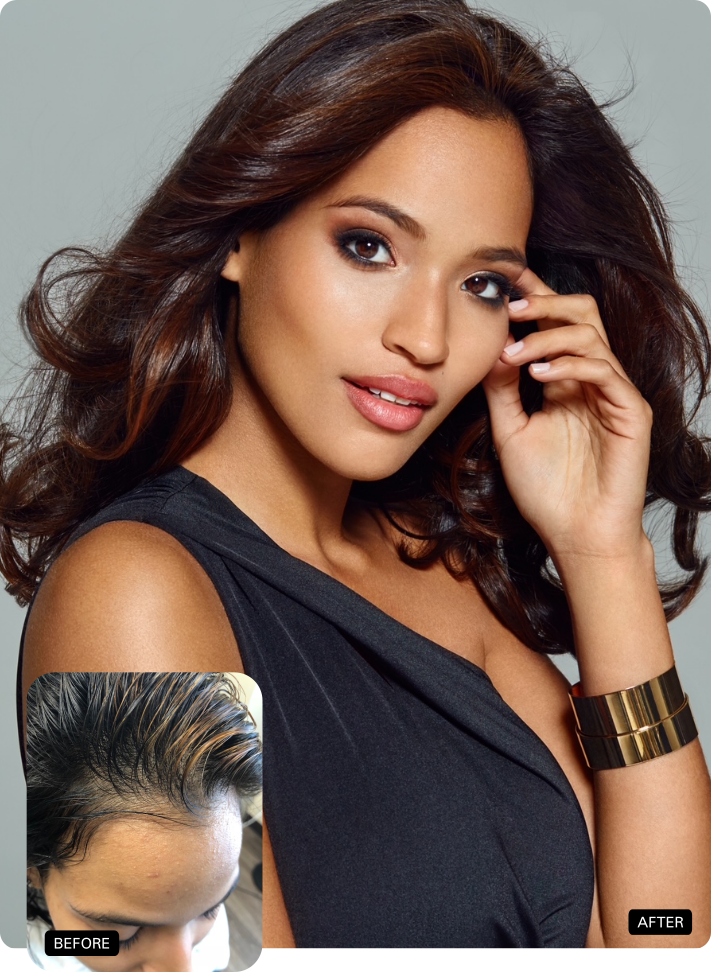
Hair loss after pregnancy is common, but that doesn't make it easier to deal with. If you're watching your hair thin out months after delivery and wondering whether it's going to come back, we can help you figure that out. We look at your hair and scalp, talk through what's going on, and lay out your options — from scalp therapy to toppers to custom hair systems — depending on where you are and what you need.
What's Happening to Your Hair
During pregnancy, elevated estrogen keeps hair in its growth phase longer than usual. After delivery, hormone levels drop and all that retained hair sheds at once. It typically starts 2-4 months postpartum and can last several months. For most women, it resolves on its own.
But not always. Sometimes postpartum shedding reveals thinning that pregnancy was masking. Other factors can make things worse. Without someone who knows what to look for, it's hard to tell what you're actually dealing with.
That's where we come in. A trichological assessment gives you a clear picture — what's temporary, what might need attention, and what your options are right now. Whether you need time and monitoring or an active solution, we'll help you figure that out.
Common Causes
Iron Depletion
Pregnancy and breastfeeding deplete iron stores significantly. Low iron weakens hair production and can slow regrowth.
Thyroid Changes
Postpartum thyroid fluctuations are more common than most people realize and can amplify or prolong shedding beyond the normal timeline.
Underlying Pattern Thinning
Pregnancy sometimes masks genetic thinning by keeping hair fuller longer. Postpartum shedding can reveal a pattern that was already developing underneath.
Your Options at UHC
Initial Assessment
We analyze your scalp and hair under magnification, review your history and timeline, and assess whether what you’re experiencing goes beyond normal shedding. You leave with clarity, understanding exactly where you stand and what your next steps should be.
Hair Toppers
Lightweight, custom-matched coverage for areas where thinning is most visible. Daily or extended wear. A practical option while your hair recovers — or a longer-term solution if needed.
CRLAB CNC XT Extensions
For women who want immediate fullness across the scalp. 3D-scanned, custom-fit, and secure for 4-5 weeks. Adds volume and density using unprocessed human hair.
Scalp Therapy & Detox
CRLAB trichological treatments are designed to support scalp health during recovery by optimizing nutrient absorption, restoring pH balance, and balancing the scalp environment creating the strongest possible foundation for healthy hair regrowth.
What to Expect
Your first visit is a private consultation. We look at your hair and scalp, talk through your timeline since delivery, and figure out whether what you're experiencing is straightforward postpartum shedding or something that needs closer attention.
If it's temporary, we'll tell you that — and we can still help with coverage in the meantime if you want it. If something else is going on, we identify it and lay out your options. Either way, you leave with a clear picture and a practical plan.
Have Questions?
We Have Answers.
What does a trichology assessment involve?
We look at your scalp and hair under magnification and talk through your timeline since delivery. If anything looks like it goes beyond normal postpartum shedding, we'll flag it and discuss your options. Takes about 30 minutes.
Do I actually need a hair system for postpartum shedding?
Most women don't. Postpartum shedding is typically temporary. But if thinning is significant and affecting how you feel day to day, a lightweight topper or extensions can bridge the gap while your hair recovers. It's your call.
When should I come in?
Anytime you're concerned. If shedding started recently, an early assessment gives you a baseline and peace of mind. If it's been going on past 9 months, that's especially worth looking into. There's no wrong time.
What if my hair doesn't fully recover?
Sometimes postpartum shedding reveals underlying pattern thinning that pregnancy was masking. If that's what's happening, we catch it early and discuss options — laser therapy, toppers, or a custom system depending on the extent.
Can scalp therapy help during recovery?
Yes. Scalp therapy supports nutrient absorption and follicle health during a period when your body is depleted. It complements the natural recovery process and pairs well with a trichology assessment.
How quickly will I see results?
Toppers and extensions offer immediate results; you leave the center with fuller hair the same day. With scalp therapy and hair loss prevention treatments, reduced shedding is typically noticeable within 3–4 months, with visible improvements in density around the 6 to 9 month mark.
Request a Callback
We'd love to chat and answer your questions. Leave us your details below and let one of our specialists get back to you.
Callback Form
Book a
Consultation
Consultations are complimentary and confidential. They include a microscopic scalp analysis at no cost to you.